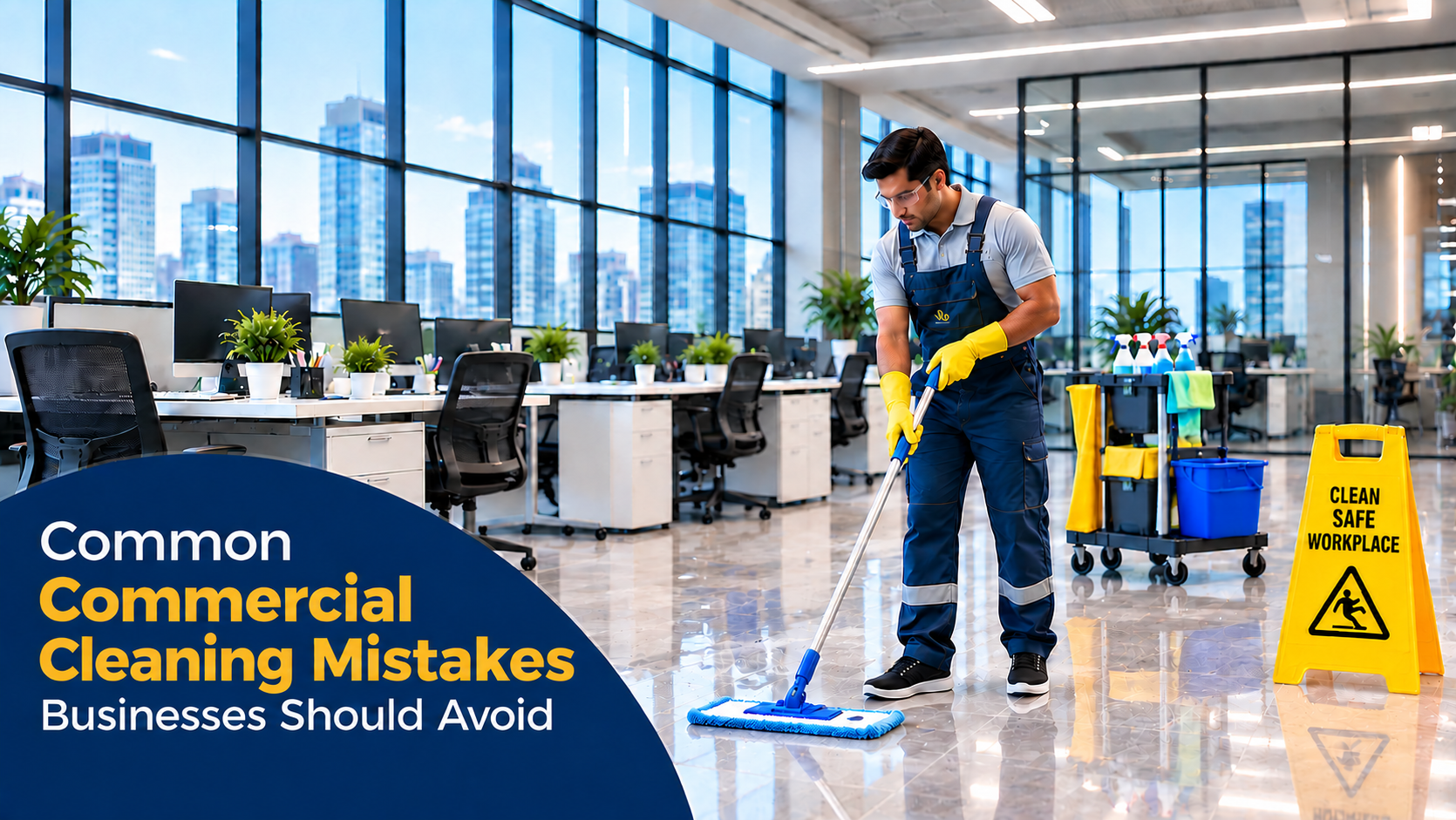
A clean workplace isn't just about first impressions. It's what lets employees actually work without distraction, keeps customers coming back with confidence, and honestly just makes for a healthier place to spend eight hours a day. Still, plenty of businesses trip up on cleaning basics, and that ends up hitting hygiene, productivity, day-to-day operations. Teaming up with a solid commercial cleaning service in London helps sidestep these problems and keeps things consistent instead of hit-or-miss.
Why Do Commercial Cleaning Mistakes Matter?
Most of these mistakes happen when cleaning gets treated like a quick daily task instead of something actually organised. Missed spots, wrong products, schedules that aren't consistent, waste piling up, small things, but they add up into bigger problems fast.
A workplace can look clean on the surface while door handles, corners, washrooms, or shared equipment sit neglected.
1. Cleaning Only What Is Visible
The problem
Dust the desks, vacuum the floors, sure, it looks tidy. But the stuff people actually touch all day, door handles, switches, lift buttons, shared equipment, pantry surfaces, that gets missed constantly.
The solution
Build a checklist that covers both what's visible and what gets touched repeatedly. Should include:
- Door handles and switches
- Shared desks and equipment
- Pantry and dining areas
- Washrooms
- Floors and corners
- High-touch common areas
Gives employees and visitors an environment that's actually cleaner, not just looking that way.
2. Using the Same Cleaning Method Everywhere
The problem
Different surfaces need different approaches, plain and simple. Wrong chemical, wrong technique, and you've damaged flooring, furniture, glass, electronics, whatever's in the way.
The solution
Match products to the surface, follow what the manufacturer actually recommends. Professional cleaners should know exactly which areas need basic cleaning versus sanitising versus full disinfection.
A proper plan here cuts the risk of surface damage while actually improving hygiene at the same time.
3. Ignoring High-Traffic Areas
The problem
Reception, entrances, corridors, washrooms, lifts, break rooms, these see heavy use every single day. Clean them once at the end of the day, and dirt's already built up hours before that.
The solution
Prioritise the high-traffic spots. Some workplaces genuinely need extra cleaning passes during working hours, not just at close.
Matters even more for businesses where customers are walking through regularly.
4. Having an Irregular Cleaning Schedule
The problem
Waiting until things look bad before cleaning is exactly how you end up with overflowing bins, dusty desks, washrooms people avoid, common areas nobody wants to sit in.
The solution
A schedule that spells out what happens daily, weekly, and on a periodic basis takes the guesswork out. Everyone knows who's handling what, and nothing important gets forgotten because "we'll get to it eventually."
5. Choosing Cleaning Services Only by Price
The problem
Cheapest quote looks like the smart move on paper. Then areas get skipped, quality's all over the place, and you're paying twice, once for the bad service, once to actually fix what it missed.
The solution
Weigh reliability, scope of work, experience, cleaning methods, flexibility, and communication, not just the price tag. A good commercial cleaning service in London should actually understand what your specific workplace needs and build a plan around that.
6. Forgetting Employee and Customer Needs
The problem
What works for one business won't necessarily work for another. An office, a retail store, a clinic, a warehouse, a restaurant, all of them need something different.
The solution
Build the routine around the people actually using the space. Working hours, how customers move through, sensitive areas, employee comfort, specific hygiene needs, all of it factors in.
Nobody should have to step around a wet floor, deal with a washroom that smells, or walk into a space filled with cleaning fumes. Cleaning should support the people in the building, not get in their way.
7. Treating Cleaning as a One-Time Task
The problem
One deep clean won't hold up for long. Give it a few days of normal use, and the dirt's already back.
The solution
Combine routine cleaning with periodic deep cleans. Regular maintenance keeps things manageable day-to-day, while deeper cleaning tackles what doesn't get touched every single day.
Choose a Cleaning Routine That Fits Your Business
Every workplace's got different cleaning needs. Right approach starts with spotting problem areas, understanding how the space actually gets used, and building a schedule around that.
Need dependable workplace maintenance? Koala Cleans can help put together a routine based on what your premises actually require. Call 0808 172 3699 to talk through your cleaning needs.
Frequently Asked Questions
Focusing on visible dirt while missing the high-touch spots people actually use throughout the day.
Most places need routine cleaning throughout the week, and high-traffic areas usually need more frequent attention on top of that.
Door handles, switches, shared equipment, anything touched repeatedly picks up dirt and germs fast, so it needs to be part of the routine, not an afterthought.
A consistently clean space cuts down on distractions from untidy or poorly maintained areas, and helps employees actually work comfortably.
Look at experience, scope of work, reliability, communication, methods, and whether they can actually meet your workplace's specific needs, not just who's cheapest.